Tenerife's Teide: Scientists Monitor Heightened Seismic Activity
Mount Teide, Spain's highest peak and a majestic natural monument on the island of Tenerife, is currently under intense scientific scrutiny. In recent weeks, the iconic volcano has entered a new phase of activity, characterized by a significant increase in seismic events. Scientists from various institutions, including the Instituto Geográfico Nacional (IGN) and INVOLCAN, are meticulously monitoring the situation, assuring the public that despite the heightened activity, there is currently no short-term or medium-term risk of eruption. However, the vigilance has been significantly ramped up, reflecting a commitment to public safety and a deep understanding of the island's dynamic geology.
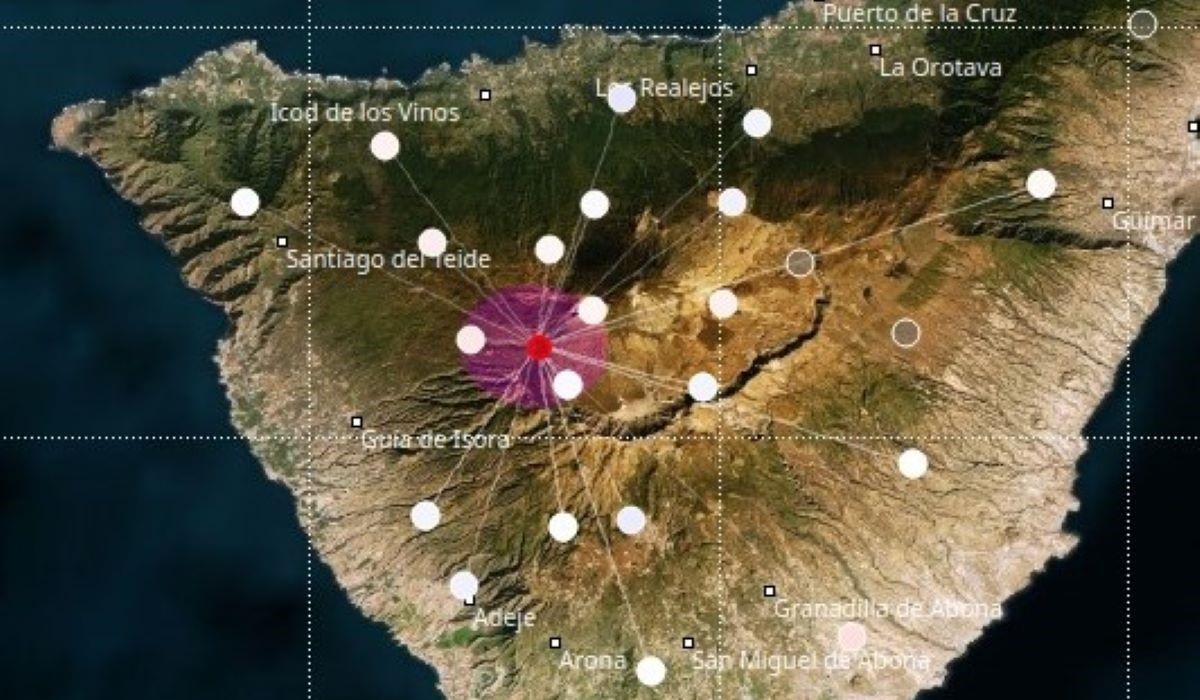
The phrase "sismos Teide hoy" has been increasingly searched online, a testament to public interest and concern. It's crucial to understand the nature of these seismic events: they are predominantly micro-earthquakes, undetectable by humans, registered only by a sophisticated network of over 100 monitoring stations spread across the island. This advanced infrastructure allows experts to track every tremor, gas emission, and ground deformation with unprecedented precision.
Unpacking the Recent Seismic Swarms Beneath Teide
The recent period has seen a remarkable surge in seismic activity, with scientists identifying multiple "seismic swarms." Over the past two weeks, a staggering nearly 7,000 seismic events have been recorded. More recently, an ongoing swarm detected earlier this week has alone accounted for over 2,500 low-intensity earthquakes. These events are not isolated incidents but rather clusters of seismic activity occurring within a localized area.
What sets these events apart is their characteristics:
- Magnitude: All recorded earthquakes are of very low magnitude, far below the threshold typically felt by humans. They are precisely what scientists refer to as "microsismos."
- Depth: The seismic activity is localized at significant depths, primarily between 7 and 10 kilometers beneath Las Cañadas del Teide. This depth is a critical factor in the current low-risk assessment.
- Location: The epicenters are concentrated in the western zone of Las Cañadas del Teide, an area that has historically experienced similar seismic swarms. Past events include those recorded in October 2016, June 2019, and June and July 2022, indicating a recurring pattern of activity in this specific region.
- Type: Many of these are classified as "hybrid events," a type of earthquake often associated with volcanic systems, involving both tectonic stress and fluid movement within the volcanic edifice.
Despite the high number of recorded events, their low intensity means they pose no direct threat to infrastructure or individuals on the surface. For a deeper dive into these seismic events, read our article:
Teide Sismos Hoy: Thousands of Earthquakes, No Eruption Risk.
Understanding Teide's Heightened Volcanic Activity: A Scientific Perspective
Scientists have described the current situation as a "jump" or a "new phase" in Teide's volcanic activity. This isn't an isolated phenomenon; it follows a pattern of increasing indicators observed in recent years. For instance, in 2016, there was a noticeable increase in gas emissions from the volcanic system. Then, in 2023, scientists began detecting significant ground deformation, indicating magma movement or pressure changes deep beneath the surface. The current seismic swarms represent another escalation in these long-term trends.
Itahiza Domínguez, director of the IGN in the Canary Islands, highlighted this progression: "Activity has increased, it has taken a leap, as occurred in 2016 with gases and in 2023 with the onset of deformation." While this signifies an active and evolving volcanic system, scientists openly admit to a degree of "uncertainty" regarding its future trajectory. They do not know how long this heightened activity will persist, whether it will stabilize, continue to increase, or eventually subside, as it has in previous cycles. This candidness underscores the complexity of volcanic systems and the cautious approach adopted by monitoring agencies.
The collaboration between the IGN, responsible for seismic monitoring, and INVOLCAN (Canarian Volcanological Institute), which focuses on geochemical and deformational monitoring, is crucial. Together, these institutions provide a comprehensive, multi-parameter view of Teide's health.
Why No Immediate Eruption Risk, But Vigilance Remains Paramount
The most important message from all scientific bodies and civil protection authorities, including the Plan Especial de Protección Civil y Emergencias por Riesgo Volcánico (PEVOLCA), is clear: there is no immediate risk of a volcanic eruption in Tenerife in the short or medium term. This assertion is based on several key scientific observations:
- Depth of Earthquakes: The significant depth (7-10 km) of the seismic activity is a primary reassuring factor. Shallow seismicity, typically above 3 km, coupled with other indicators, would be a much stronger precursor to an imminent eruption.
- Absence of Other Critical Indicators: While seismicity has increased, scientists have not observed concurrent critical changes in other key parameters, such as rapid, widespread ground deformation, or significant alterations in gas chemistry at the surface that would indicate magma nearing the surface.
- Historical Precedent: As noted, similar seismic swarms have occurred in the past without leading to an eruption. While each event is unique, historical data helps scientists understand typical patterns of Teide's behavior.
Despite this, experts unanimously agree that vigilance cannot be lowered. The "jump" in activity means the system is dynamic, requiring constant, real-time monitoring. Regular meetings of PEVOLCA, bringing together eight institutions and government bodies, are being held to ensure all data is analyzed, protocols are reviewed, and communication channels are open. For more on the lack of immediate risk, see our related article:
Unfelt Sismos in Teide: Experts Urge Vigilance, Not Alarm.
Teide's Advanced Monitoring Network: Eyes and Ears on the Volcano
Tenerife, due to its active volcanic landscape, boasts one of the most advanced and comprehensive volcano monitoring networks in the world. This network is far more than just seismographs. It includes:
- Seismic Stations: Over 100 highly sensitive seismometers distributed across the island continuously record ground vibrations. These detect even the weakest "sismos Teide hoy" that are unfelt by humans.
- GPS and InSAR Systems: Global Positioning System (GPS) receivers and Interferometric Synthetic Aperture Radar (InSAR) techniques precisely measure ground deformation down to millimeters. Changes in ground elevation or horizontal movement can indicate pressure build-up from magma or fluids below.
- Gas Geochemistry Sensors: Fixed stations and mobile sampling teams regularly analyze the composition and flux of gases (like CO2, SO2, H2S) emitted from fumaroles and diffuse degassing zones. Changes in gas type or volume can signal magma ascent.
- Gravimetry: Changes in gravity can sometimes indicate mass redistribution beneath the surface, such as magma movement.
- Thermal Cameras: These monitor subtle changes in surface temperature, which could be indicative of increased heat flow from the volcano.
This multi-parameter approach allows scientists to construct a holistic, real-time picture of Teide's activity, integrating diverse data streams to detect any anomaly or evolving trend that might signal an increased risk.
For Residents and Visitors: Navigating Information and Maintaining Calm
For the hundreds of thousands of residents and millions of tourists who enjoy Tenerife's stunning landscapes, including Teide National Park, the primary message is one of calm and confidence in the scientific oversight. The current seismic activity is a natural part of living on a volcanic island.
- Trust Official Sources: Always refer to official communications from the IGN, INVOLCAN, and the Canary Islands government. These are the most reliable sources of information.
- Enjoy Teide Responsibly: Teide National Park remains open and safe for visitors. The monitoring systems are designed precisely to ensure that any significant change would be detected and communicated well in advance, allowing for timely action.
- No Need for Alarm: The fact that these earthquakes are unfelt by the population underscores their low intensity and the depth of their origin, distinguishing them from potentially dangerous seismic events.
Tenerife has robust emergency plans (PEVOLCA) in place, which are regularly reviewed and updated. These plans are comprehensive, covering everything from evacuation routes to public communication strategies, ensuring the safety of everyone on the island should the situation ever change.
Conclusion
The ongoing seismic activity beneath Teide is a testament to the dynamic nature of volcanic islands. While the increase in micro-earthquakes and the overall "jump" in activity warrant close attention, scientists unequivocally state there is no immediate risk of eruption. The sophisticated monitoring network, combined with the dedicated expertise of institutions like the IGN and INVOLCAN, ensures that Teide's pulse is constantly being taken. For both residents and visitors, the message is clear: stay informed via official channels, continue to enjoy the beauty of Tenerife, and rest assured that the volcano is under diligent watch.