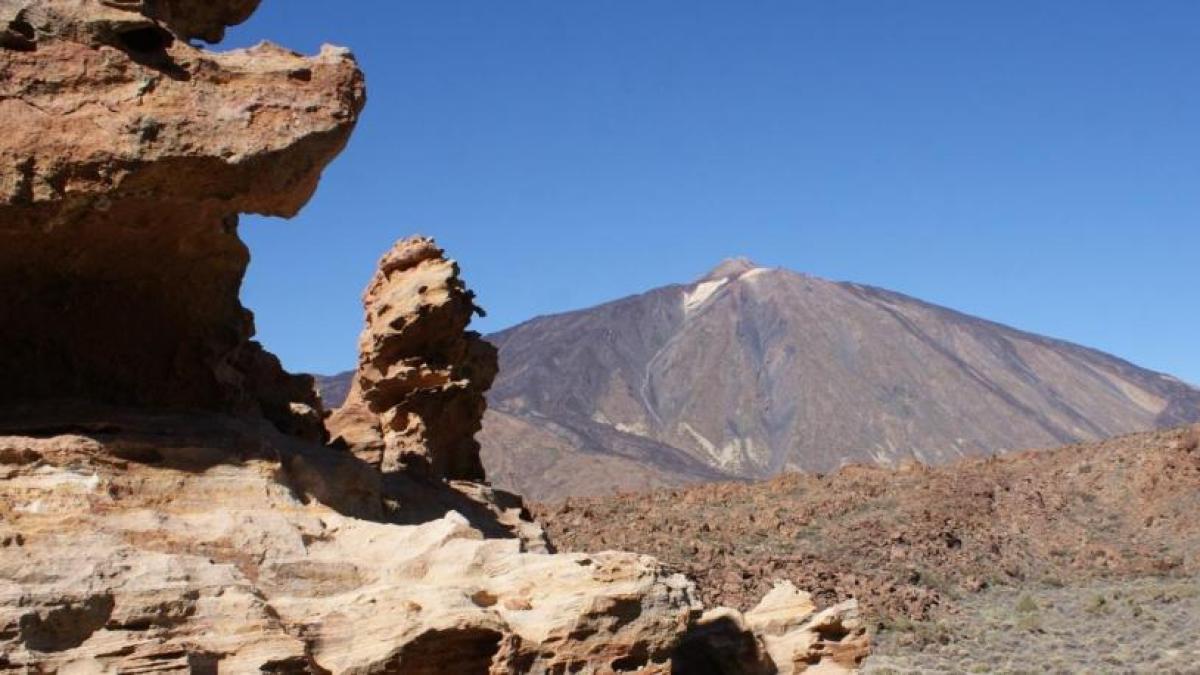
Teide Sismos Hoy: Thousands of Earthquakes, No Eruption Risk
The majestic Pico del Teide, Spain's highest peak and the volcanic heart of Tenerife, has been buzzing with unusual activity in recent weeks. Scientists monitoring the island have recorded thousands of seismic events beneath the iconic volcano, leading to heightened vigilance among experts. While the phrase "sismos Teide hoy" might spark concern for some, a comprehensive analysis by leading geological institutions confirms a crucial message: there is currently no short-term risk of eruption. Instead, this surge in micro-earthquakes represents a new, dynamic phase in Teide's ongoing volcanic evolution, one that is being meticulously observed with state-of-the-art technology.
Unseen Tremors: The Nature of Teide's Recent Seismic Activity
Over the past few weeks, Tenerife has experienced a significant increase in its seismic heartbeat. Reports indicate several "seismic swarms," accumulating close to 7,000 individual tremors, with one recent swarm alone accounting for more than 2,500 events. These numbers, while seemingly dramatic, require context. The earthquakes are consistently of very low magnitude – often described as "microsismos." This means they are so faint that they are completely unfelt by the island's population, residents and tourists alike.
The critical factor in assessing their significance lies in their depth and location. These tremors are primarily situated at depths ranging from 7 to 10 kilometers beneath the western sector of Las Cañadas del Teide. This deep-seated activity is typical of hydrothermal system adjustments or fracturing of rock due to stress changes within the crust, rather than the shallow, more forceful movements often associated with ascending magma prior to an eruption. The sophisticated network of over 100 seismic stations deployed across the island by institutions like the Instituto Geográfico Nacional (IGN) and INVOLCAN are the only "witnesses" to these subterranean whispers, ensuring that even the weakest signals are captured and analyzed.
A "Leap" in Activity: Understanding the Volcanic Dynamics
Experts unanimously describe the current situation as a "salto" – a leap or surge – in volcanic activity. This isn't an unprecedented phenomenon for Teide, an active but currently dormant stratovolcano. According to Itahiza Domínguez, director of the IGN in the Canary Islands, similar shifts have been observed before: a notable increase in gas emissions in 2016 and the onset of ground deformation in 2023. These historical parallels highlight that Teide is a living, breathing geological entity, constantly adjusting and evolving.
The scientific community openly acknowledges a degree of uncertainty regarding the duration and future trajectory of this heightened activity. "We don't know how long it can last, whether it will maintain or decrease this activity," Domínguez states. This uncertainty is not a cause for alarm but rather a standard aspect of volcanological monitoring. Volcanoes rarely follow predictable, linear paths. What is certain, however, is the commitment to continuous, real-time monitoring and analysis by a dedicated team of scientists. For more on the ongoing vigilance, you can refer to
Tenerife's Teide: Scientists Monitor Heightened Seismic Activity.
Comprehensive Monitoring: Tenerife's Shield Against Volcanic Risk
Tenerife benefits from one of the most robust and advanced volcanic monitoring systems in the world. The collaboration between the IGN, INVOLCAN, and the Plan de Especial Protección Civil y Emergencias por Riesgo Volcánico (PEVOLCA) ensures a multi-faceted approach to vigilance. This network isn't just listening for "sismos Teide hoy"; it's a comprehensive observatory gathering data on several critical parameters:
* **Seismicity:** As discussed, detecting and locating earthquakes, including subtle hybrid events that can sometimes indicate fluid movement.
* **Ground Deformation:** Using GPS and inclinometers to measure any changes in the shape or elevation of the volcano, which could signal magma movement beneath the surface.
* **Geochemistry:** Analyzing gas emissions (e.g., CO2, SO2) from fumaroles and diffuse degassing areas, as changes in gas composition or flux can precede eruptions.
* **Thermal Monitoring:** Observing temperature anomalies that might indicate shallow magma intrusion.
This integrated approach allows scientists to build a complete picture of the volcano's internal processes. The fact that the current seismic swarms are not accompanied by significant ground deformation or anomalous gas emissions is a key factor in the experts' assessment of low eruption risk. This meticulous data collection and analysis are precisely why authorities can confidently reassure the public while maintaining heightened vigilance.
Historical Context and Expert Reassurance: No Immediate Threat
It's important to remember that seismic swarms are a recurrent feature of Teide's activity. Past episodes of similar characteristics have been recorded in October 2016, June 2019, June and July 2022, and other periods. These historical events, like the current one, did not lead to eruptions, reinforcing the understanding that such deep, low-magnitude seismicity is part of the volcano's natural behavior.
Officials from the IGN and INVOLCAN, after regular meetings of the PEVOLCA committee, have consistently reiterated that this type of seismic activity, while increased, "does not increase the danger of an eruption in the short term." They emphasize that the critical indicators that would precede a dangerous eruption – such as shallow, high-magnitude earthquakes, rapid and pronounced ground deformation, or significant changes in gas emissions – are simply not present. While a certain level of uncertainty is inherent in volcanology, the current data paints a clear picture: vigilance, yes; alarm, no. For a deeper dive into why experts urge calm, read
Unfelt Sismos in Teide: Experts Urge Vigilance, Not Alarm.
What This Means for Residents and Visitors
For those living on or visiting Tenerife, the message from the scientific community is one of reassurance and sensible awareness.
- Stay Informed: Rely on official sources like the IGN, INVOLCAN, and local government channels for accurate updates. Avoid speculation and unverified information on social media.
- Enjoy the Island: There is no impact on daily life or tourism activities. The national park remains open, and hiking the Teide trails is safe under normal conditions.
- Appreciate the Science: Understand that this period of increased "sismos Teide hoy" is a testament to the advanced monitoring capabilities and dedication of scientists working to ensure public safety.
The volcanic landscape of Tenerife is a wonder of nature, a dynamic environment shaped by geological forces. The current seismic activity is a reminder of this powerful natural process, but one that is under constant, expert scrutiny.
Conclusion
The recent increase in "sismos Teide hoy" marks a period of heightened scientific interest in Tenerife's iconic volcano. While thousands of micro-earthquakes have been recorded deep beneath Teide, experts from the IGN, INVOLCAN, and PEVOLCA are steadfast in their assessment: there is no immediate risk of an eruption. This robust conclusion is based on an extensive, multi-parameter monitoring network and a deep understanding of Teide's historical volcanic behavior. The activity represents a natural, ongoing process of a living volcano, signaling a need for continuous vigilance, not public alarm. Tenerife remains a safe and spectacular destination, with its volcanic heart closely watched by dedicated scientists committed to safeguarding the island and its inhabitants.